
News & Insights
2026年2月3日
The Ultimate Guide to Shore Power Systems: Decarbonizing the Maritime Future
Shore Power is a relatively simple concept with complex engineering execution.
1. What is Shore Power and Why Does it Matter?
Defining the Concept
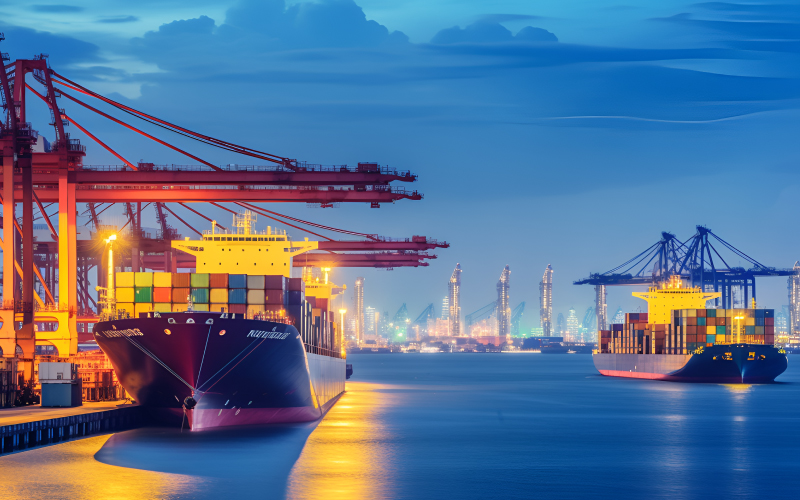
At its core, Shore Power is a relatively simple concept with complex engineering execution. It involves connecting a ship to the land-based electrical grid while it is at the quay, allowing the vessel to shut down its diesel engines completely.
While the concept dates back to the early 20th century (when smaller vessels used basic plug-ins), modern Shore Power systems are high-tech, high-capacity installations capable of delivering megawatts of power to massive container ships and luxury cruise liners.
The Drivers: Environment and Regulation
Why is Shore Power no longer an "optional" luxury but a mandatory requirement?
- Decarbonization and Air Quality:A large cruise ship sitting at port for 10 hours can emit as much particulate matter as several thousand cars. Shore Power eliminates these tailpipe emissions entirely at the point of use. If the electricity is sourced from renewables (wind, solar, or hydro), the carbon footprint of the vessel’s port stay drops to zero.
- Regulatory Pressure:IMO Strategy:The International Maritime Organization (IMO) has set ambitious targets to reduce the total annual GHG emissions from international shipping by at least 20% by 2030, and 70% by 2040, compared to 2008.EU’s "Fit for 55":The European Union’s FuelEU Maritimeregulation mandates that from 2030, containerships and passenger ships must use shore-side electricity for all energy needs while at berth in major EU ports.CARB (California Air Resources Board):California has long led the way, with strict mandates requiring specific ship types to plug in, or face significant fines.
- Noise and Vibration Reduction:Auxiliary engines are noisy. By switching to shore power, ports become significantly quieter, improving the quality of life for nearby residents and the working conditions for port staff and crew.
2. The Anatomy of a Shore Power System
A Shore Power system is not just a "long extension cord." It is a sophisticated chain of electrical infrastructure that must bridge the gap between a stable land-based grid and a moving, floating vessel. The system is generally divided into two sides: The Shore-Side Installationand The Ship-Side Installation.
A. Shore-Side Infrastructure
- Substation and Transformer:Most national grids provide power at voltages too high for direct ship use. Subsections step down the voltage (e.g., from 110kV to 6.6kV or 11kV).
- Frequency Converters:This is a critical component. While most of the world uses 50Hz electricity, roughly 70% of the global shipping fleet operates on 60Hz. Frequency converters ensure the "language" of the grid matches the "language" of the ship.
- Shore Protection and Control Switchgear:This ensures the safety of the connection, protecting against surges, short circuits, and grounding faults.
- Cable Management Systems (CMS):These are the mechanical "arms" or reels that handle the heavy, high-voltage cables. Leading providers like Cavotec specialize in these systems, which must be able to adjust to tidal changes and the shifting of the ship in the water.
B. The Connection Point
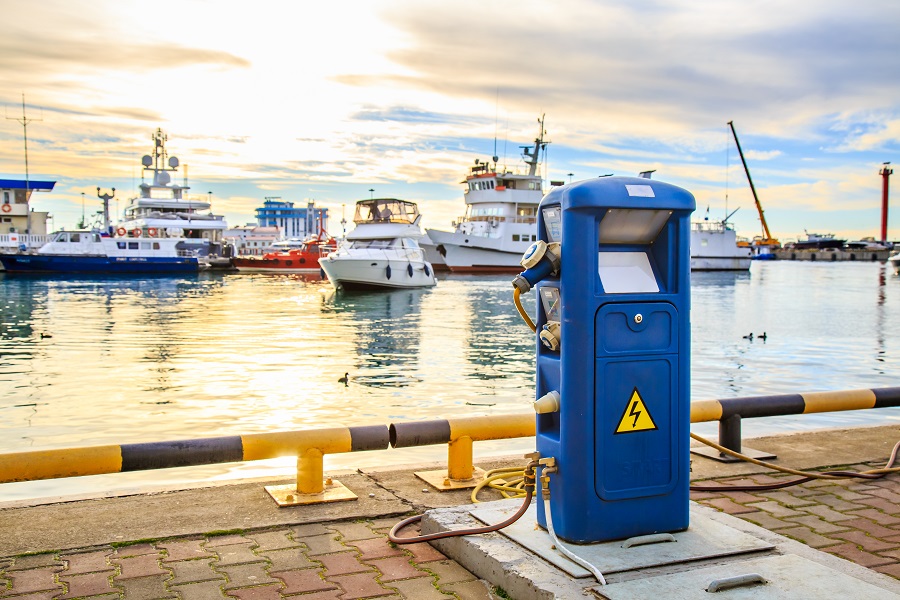
- Shore Box / Pit:Located on the quay, this contains the sockets where the ship’s cables are plugged in.
- Plugs and Sockets:These must be standardized to ensure a ship from Singapore can plug into a port in Rotterdam. The international standard IEC/IEEE 80005-1governs these connections.
C. Ship-Side Infrastructure
- Onboard Transformer:To adjust the received voltage to the ship’s internal distribution levels.
- Onboard Switchgear and Control Panel:Allows the crew to synchronize the shore power with the ship's generators before "taking over" the load, ensuring there is no "blackout" during the transition.
- Cable Reel (Optional):Some ships carry their own cables to be lowered down to the quay.
3. High Voltage vs. Low Voltage Shore Power
The power requirements of a vessel dictate the type of system required.
High Voltage (HV) Shore Power
Typically ranging from 6.6 kV to 11 kV, High Voltage systems are used for large vessels with high energy demands.
- Target Vessels:Large Container ships, Cruise ships, LNG carriers.
- Benefits:Using higher voltage allows for the transmission of massive amounts of power through relatively manageable cable sizes. It reduces energy loss over the distance of the cable.
Low Voltage (LV) Shore Power
Typically 400V to 690V.
- Target Vessels:Tugs, OSVs (Offshore Supply Vessels), small Ferries, and Yachts.
- Benefits:Lower infrastructure costs and simpler equipment. However, because the voltage is lower, the amperage must be higher to provide the same power, which can lead to heat issues if not managed correctly.
4. Tailoring Solutions: Different Ships, Different Needs
One size does not fit all in maritime electrification. The operational profile of a vessel determines how a Shore Power system is designed.
Container Ships
Container ships operate on tight schedules. Their Shore Power systems must be:
- Fast to connect:Every minute at the quay is money.
- Flexible:Depending on the cargo load, the ship might sit higher or lower in the water. The cable management system must have enough "slack" and automation to handle this.
- High Capacity:Modern "Mega-Max" vessels require significant power to keep thousands of refrigerated containers (reefers) cold.
Cruise Ships
Cruise ships are essentially floating cities. Their power demand is the highest in the industry.
- Extreme Load:A large cruise ship may require up to 16 to 20 MW of power—enough to power a small town.
- Multiple Connections:They often require several high-voltage cables connected simultaneously.
- Aesthetic and Space Constraints:Ports hosting cruise ships are often tourist hubs, so the equipment must be compact and often "hidden" or integrated into the wharf architecture.
Ro-Ro and Ferries
Ferries have the advantage of "predictability." They return to the same berth multiple times a day.
- Automated Connections:Because they dock so frequently, manual plugging is inefficient. Many ports use automated "hands-free" robotic arms that connect the power within seconds of docking.
- Battery Charging:For hybrid or all-electric ferries, the Shore Power system doubles as a high-speed charging station.
5. Key Factors for Successful Implementation
Building a Shore Power infrastructure is a significant capital investment. For port authorities and ship owners, several factors determine the project's success.
I. Standardization and Interoperability
Without global standards, the maritime industry would face a "charger crisis" similar to the early days of mobile phones. Adhering to IEC/IEEE 80005standards is non-negotiable. This ensures that a vessel built in a Korean shipyard can seamlessly connect to a terminal in Los Angeles or Hamburg.
II. Grid Capacity
A port’s Shore Power system is only as good as the grid behind it. If a port city’s local grid cannot handle the sudden "peak load" of three cruise ships plugging in at once, the system fails. This often requires ports to work closely with municipal utility providers to upgrade local substations.
III. Frequency Conversion
As mentioned, the 50Hz vs. 60Hz divide is a major technical hurdle. Static Frequency Converters (SFCs) are the most common solution. They are highly efficient but represent a significant portion of the project’s cost.
IV. Total Cost of Ownership (TCO)
The "Green Premium" is a reality. Shore power currently often costs more than burning low-sulfur fuel oil, depending on local electricity prices. To make it viable, many regions offer:
- Government Subsidies:Grants for infrastructure installation.
- Tax Exemptions:Lowering the electricity tax for maritime use.
- Port Fee Discounts:Rewarding "green" ships with lower docking fees.
6. Overcoming the Challenges
Despite the clear benefits, Shore Power faces hurdles:
- Space Limitations:Older ports are often cramped. Finding room for large transformers and cable reels on a 50-year-old concrete pier is a major engineering challenge.
- Tidal Ranges:In ports with extreme tides (like those in the UK or France), the vertical movement of the ship can be 10 meters or more. Cable management systems must be highly sophisticated to prevent cable tension or breakage.
- Initial Investment:The "chicken and egg" problem—ports don't want to build if ships aren't ready; ship owners don't want to retrofit if ports aren't ready. However, current regulations (like FuelEU) are effectively solving this by mandating both sides act.
7. The Future: Automation and Smart Ports
The next generation of Shore Power is moving toward Full Automation. We are seeing the rise of:
- Self-positioning Cable Arms:Using sensors and AI to locate the ship’s inlet door and plug in without human intervention.
- Integration with Energy Storage:Using large-scale port batteries to "buffer" the grid, storing energy when demand is low and discharging it when a ship plugs in.
- Digital Twins:Software that simulates the power flow and mechanical stress on cables in real-time to predict maintenance needs before a failure occurs.
Conclusion: Setting Sail Toward Zero Emissions
Shore Power is no longer a niche environmental project; it is a foundational pillar of modern maritime logistics. For port authorities, it is a license to operate in an increasingly regulated world. For ship owners, it is a critical step in meeting ESG (Environmental, Social, and Governance) goals and ensuring future-proof operations.
As we look toward 2030 and beyond, the integration of Shore Power with renewable energy grids will transform ports from pollution centers into "Green Energy Hubs." The technology is here, the standards are set, and the mandate is clear. The only question remains: how quickly can we scale?
Editor’s Note: A Continuous Journey
This guide serves as the foundation for our ongoing series on Maritime Electrification. In the coming weeks, we will dive deeper into specific sub-topics, including:
- Deep Dive: The Engineering behind Frequency Converters.
- Case Study: How Northern European Ports achieved 100% Shore Power adoption.
- Retrofitting vs. Newbuild: A financial guide for shipowners.
- The role of Automation in Shore Power safety.
Stay tuned as we explore the technical and strategic nuances of a cleaner, quieter, and more efficient maritime industry.